Explore
TOP ACTIVITIES


Manage
Support
GET THE APP

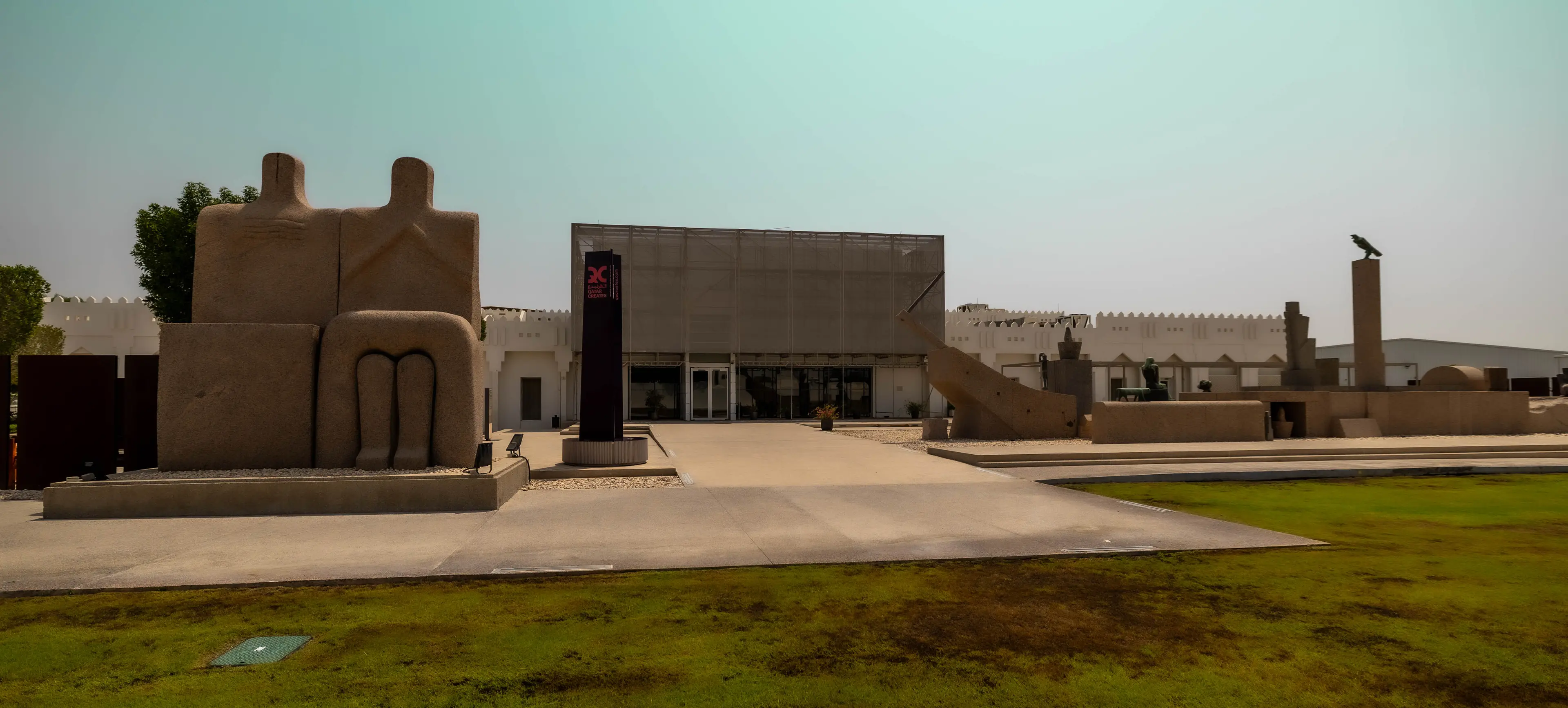
Opening Hours
Sun, Tue, Wed, Sat
9am – 7pm
Thursday
9am – 9pm
Friday
1:30pm – 7pm
Monday
Closed
Before Mathaf had galleries, it had a collector. For nearly two decades, Sheikh Hassan bin Mohammed bin Ali Al Thani gathered modern Arab art in two private villas in Madinat Khalifa — painting by painting, sculpture by sculpture, until the collection outgrew the rooms. When he donated everything to Qatar Foundation in 2010, it became something unprecedented: the Arab world's first museum dedicated entirely to modern and contemporary art.
Today, more than 9,000 works fill seven permanent galleries arranged thematically, not chronologically — each room a question the next one answers differently. Etel Adnan's luminous landscapes near Shakir Hassan Al Said's calligraphic abstractions. Saloua Raouda Choucair's geometric sculptures alongside Wael Shawky's cinematic provocations. Gallery 9 — Portraits of Changing Societies — tracks how artists responded to the century's turning points: wars, independence, oil, migration, identity. The FOCUS solo exhibition series regularly reframes how we understand a single artist's practice. It's a collection that doesn't just document a region — it argues with it.
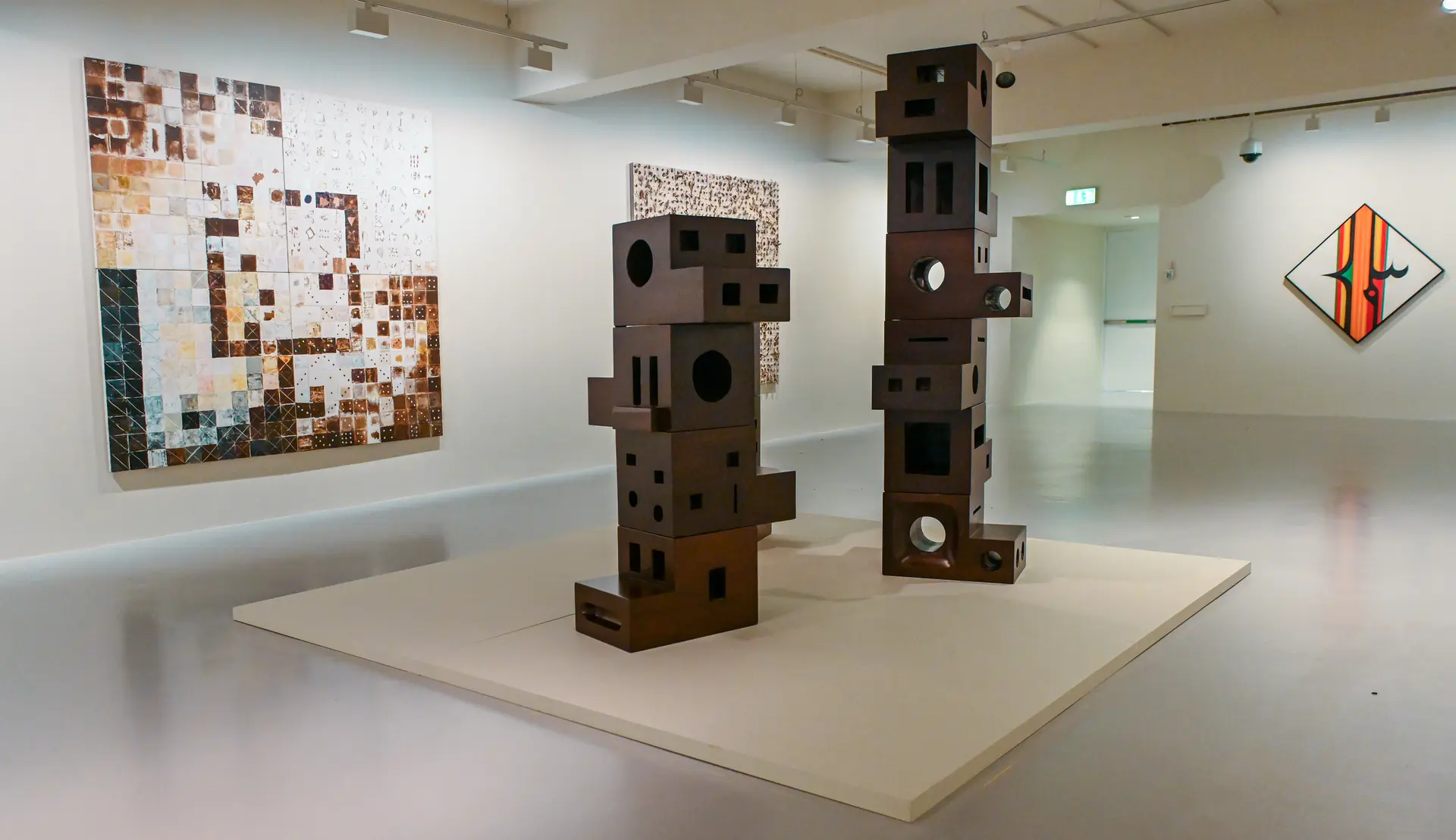
Admission is free, always, for everyone. No booking needed. Come for an hour between errands or give it the whole morning. Bring the kids — there are discovery packs at reception and workshops most weekends. This is the kind of museum that meets you wherever you are.
At a Glance
9,000+
Works in the collection
150+
Years of Arab art history
2
Floors of galleries
Free
Admission
Things to Do
The Café Terrace
Joe & The Juice on the ground floor. You don't need a gallery ticket. The outdoor seating is one of the best quiet spots on campus. Coffee, juice, light food, and the pace drops immediately.
The Research library
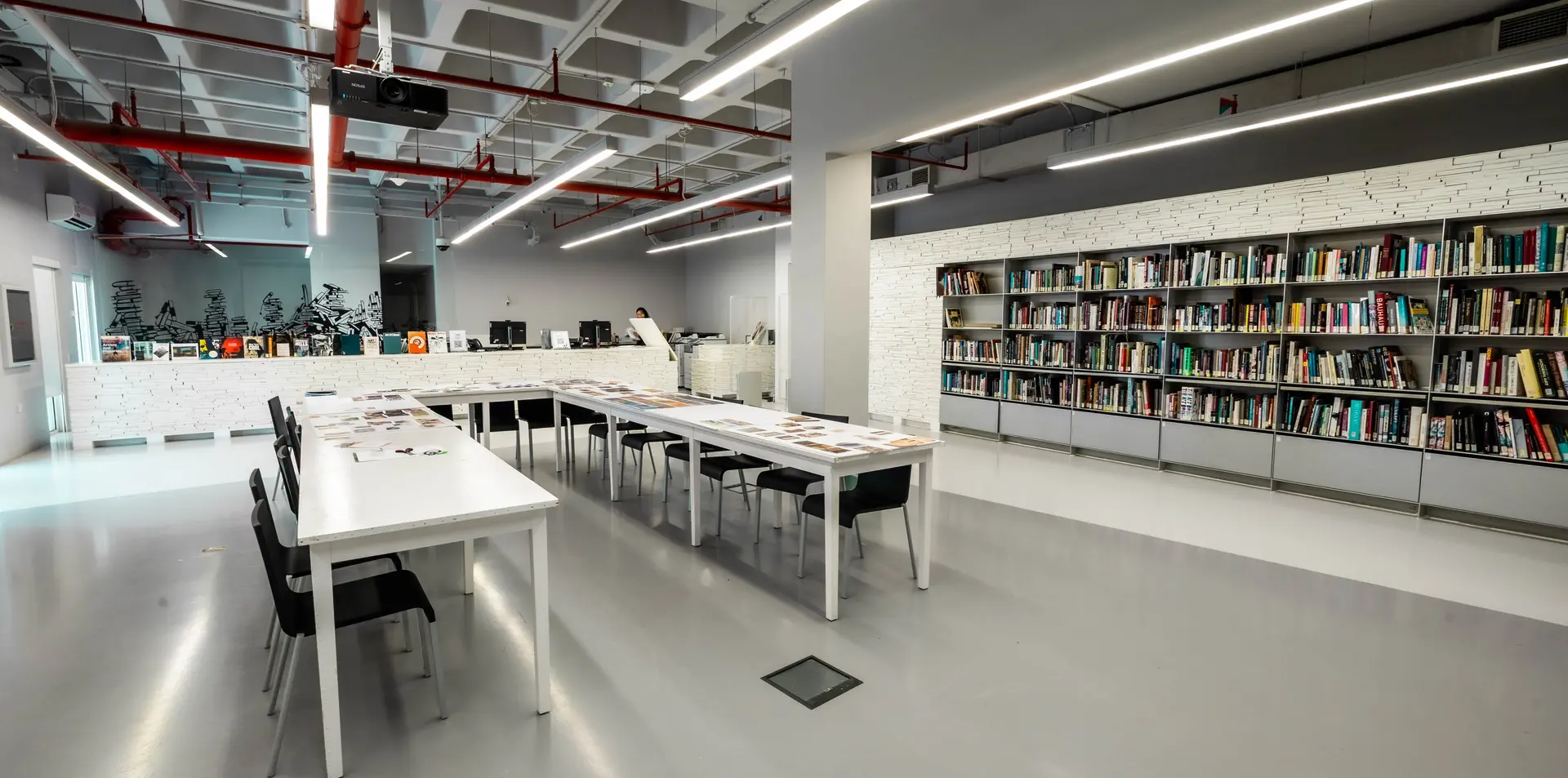
Open to the public. Specializes in modern art and art history with a focus on the Arab world. The kind of place you disappear into for an hour without planning to.
The Gift Shop
Near the entrance. Art books, culturally inspired gifts, exhibition catalogues. The best place on campus to buy a book about regional art. Worth a browse even if you didn't plan on it.
The art you won't find anywhere else
Before there was a museum, there were two private villas and a collector who couldn't stop acquiring.
Sheikh Hassan didn't buy for investment or institutional prestige. He bought because he believed modern Arab art deserved the same serious attention Western modernism received — and that conviction, personal and stubborn and ahead of its time, shaped everything. When the collection moved from Madinat Khalifa into a purpose-built museum in 2010, it carried that DNA with it: not a collection assembled by committee, but one built on a point of view.
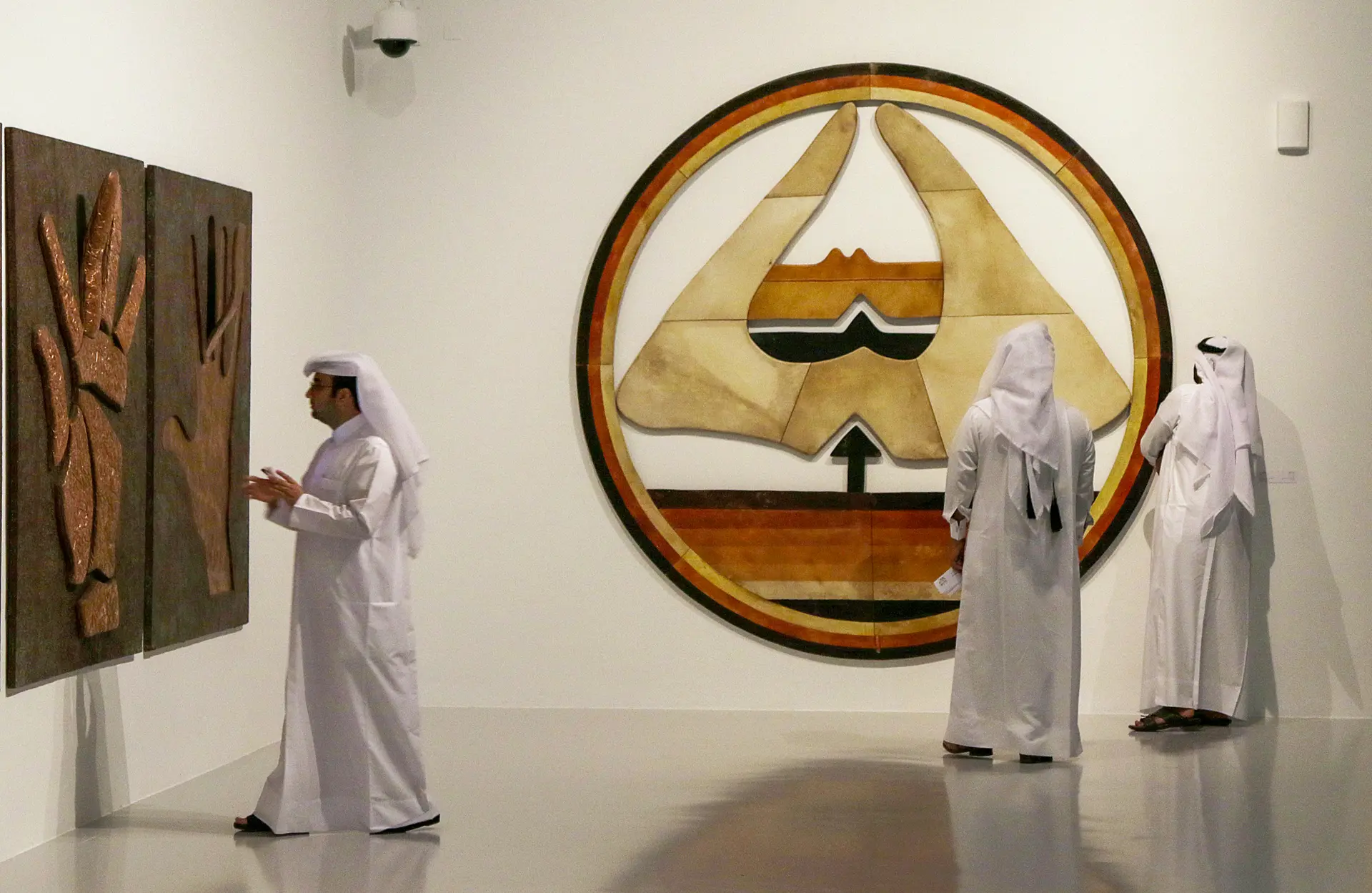
Nine thousand works later, the point of view still holds. The galleries are arranged thematically, not chronologically. Jewad Selim's Baghdadiat figures sit near Mahmoud Moukhtar's Egyptian sculptures — two different visions of Arab modernity, separated by decades, speaking directly to each other across the room. The FOCUS solo exhibition series strips this further, isolating a single artist's practice to let you see how one mind worked across a career. Previous FOCUS artists include Farid Belkahia, Abdelhalim Radwi, Faraj Daham, and Inji Aflatoun.
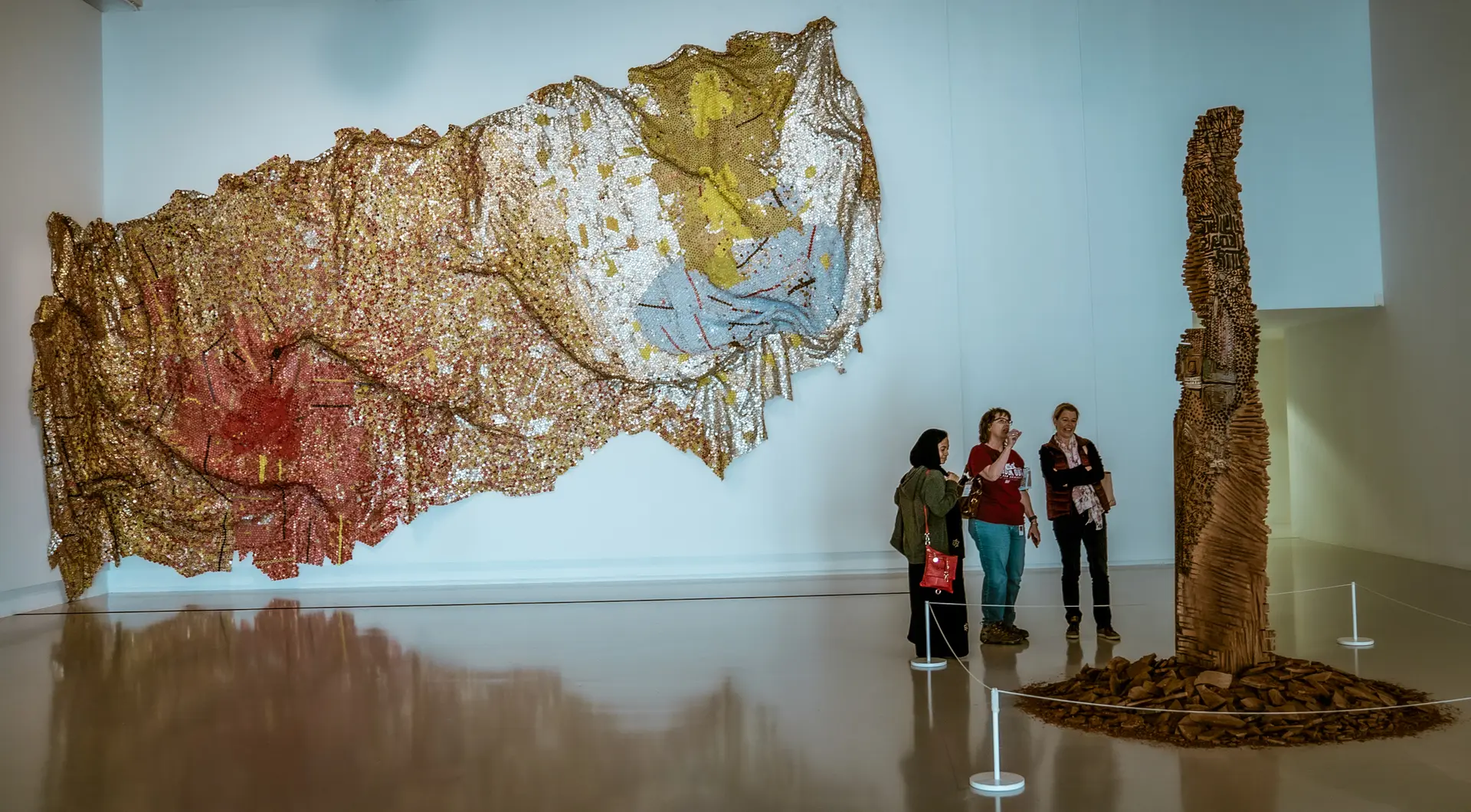
Gallery 9 — Portraits of Changing Societies — is where most visitors spend the longest. It tracks how artists responded to the twentieth century's turning points: colonialism, independence, oil wealth, migration, identity. Paintings that functioned as political acts hang next to photographs that documented a world disappearing in real time. It's the room you'll describe to someone when they ask what Mathaf is like.
The collection keeps growing. New acquisitions, new loans, new conversations between old works and contemporary practice. Every visit, the arrangement has shifted slightly. The museum is still becoming.
Family
Discovery packs
At reception, QAR 20 refundable deposit. Turns the galleries into a scavenger hunt.
Family workshops
Most Saturdays — check the schedule. Kids make art, not just look at it. Materials provided.
Stroller access
Fully accessible throughout. No need to fold — just roll in.
Nursing room
Available — ask at reception.
Best time for families
Saturday mornings for workshops. Weekday mornings for quieter galleries.
Guidelines
Photography
Welcome for personal use. No flash. Look for signage where restricted. Tag @mathafmuseum.
Food & drink
In the café and terrace area only, not in the galleries. The terrace is a destination in itself.
Touch
Please don't touch the artworks. Discovery packs give kids tactile activities instead.
Bags
All bags go through security at entry. Large backpacks may need a locker — free, right by the entrance.
The museum that talks back
Some of the artists on the walls are still alive. Some stand in the rooms where their work hangs.
Artist Encounters bring creators back into the galleries — not for formal lectures, but for genuine exchanges about process, doubt, inspiration, and what it means to see your work in dialogue with someone else's. These aren't performances. They're conversations you happen to be part of.
Mathaf Voices trains university students to give gallery tours from their own perspectives. Not scripted talking points — genuine readings shaped by what each guide brings to the work. A computer science student's interpretation of a Shakir Hassan Al Said grid is different from an art history student's. That's the point.
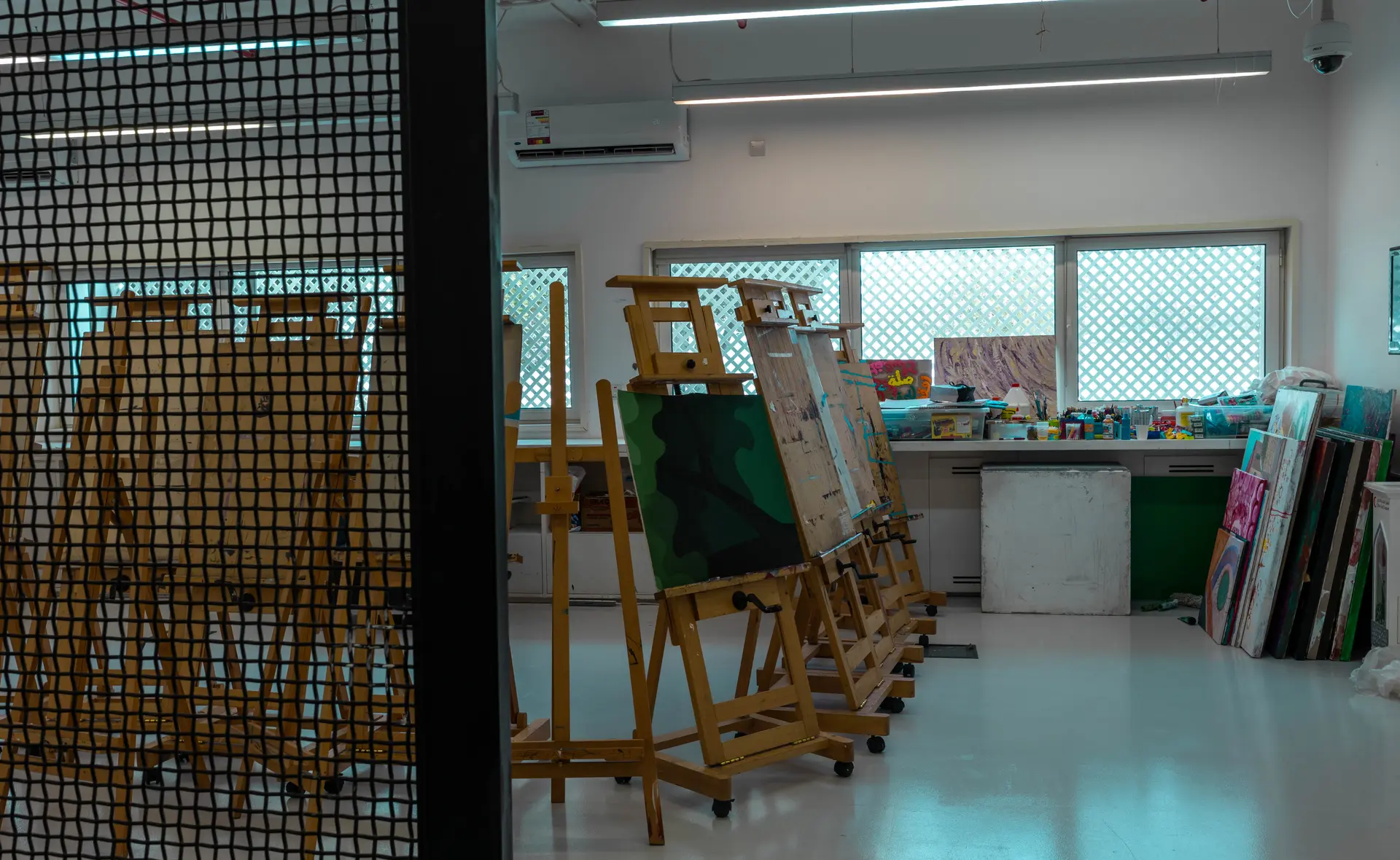
Family workshops happen most weekends. Kids make art here — they don't just look at it. Discovery packs at reception (QAR 20 refundable deposit) turn a gallery visit into a scavenger hunt. And then there's the Wall of Art — collaborative art sessions where children work alongside practicing artists.
The museum's most important program isn't any single event. It's the idea that art is something you do with, not something done to you. Mathaf doesn't just show modern Arab art — it insists that modern Arab art is still being made, still being argued about, and still looking for the next voice in the conversation.
The museum at your own pace, for your own group. Ideal for delegations, teams, and visiting families who want a guided walk through the collection without the crowd.
Accessibility
Wheelchair access
Full accessibility on both floors, with an elevator between levels. Wheelchairs available on request at no charge — ask at reception.
Accessible restrooms
On every floor.
Accessible parking
Designated spaces near the main entrance.
Audio guides
Available in multiple languages. Audio descriptions for select exhibitions.
Sensory
Quiet weekday mornings recommended. Tuesday and Wednesday are typically quietest.
Reception team
Can help with any accessibility needs. Don't hesitate — they're there for exactly this.
Stay for the library, the terrace, and the afternoon
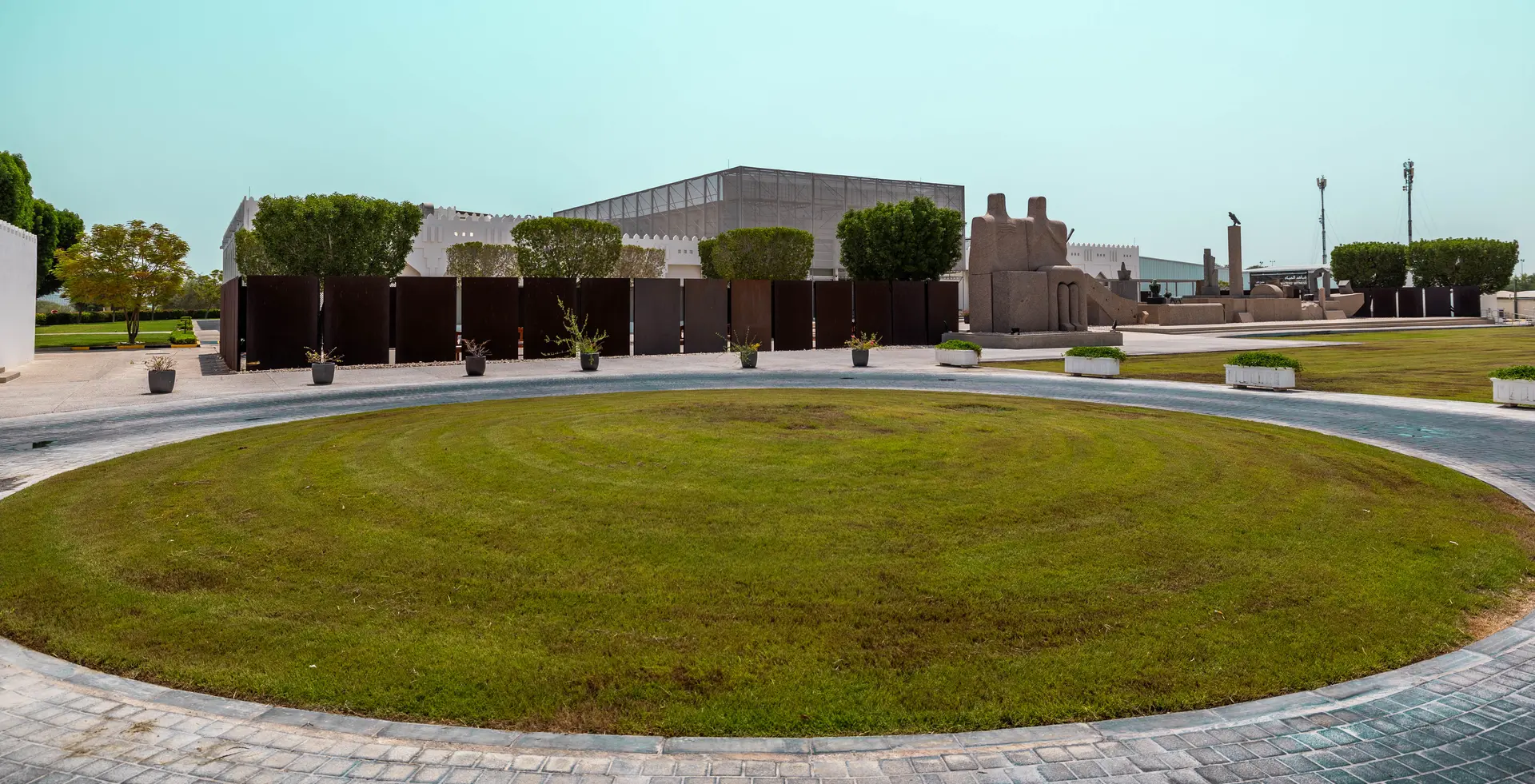
Jean-François Bodin transformed a former school into a 5,500 sqm exhibition space — but he didn't erase what was there. The building still carries a warmth, an accessibility, a quiet insistence that art is for learning with, not just looking at. Ground floor: atrium, five temporary exhibition galleries, the café, the library, the gift shop. Upper floor: seven permanent collection galleries with natural light, open sightlines, and generous spacing. The proportions feel right — big enough to hold 9,000 works, intimate enough that you never feel lost.
A quiet Tuesday morning when you have galleries to yourself. Saturday with the kids for a family workshop and discovery packs. Thursday evening until 9pm — fewer families, lower light, different mood. Same art, different experience every time. Mathaf isn't a once-a-year outing. It's free, it's open, and it changes with the time of day and whatever you're carrying with you that week.
Green Line to Education City station, then a 15-minute walk — or take the EC Tram Blue Line from EC Stadium North to the Mathaf stop (end of the line), about a 3-minute walk from the entrance.
Dedicated Mathaf stop on the Blue Line, about a 3-minute walk to the entrance. For QNL (Multaqa stop), Oxygen Park or EC Mosque (Minaretein stop), change to the Yellow Line at EC Stadium North or NorthNest. Trams run every 7–17 minutes.
The free Mathaf bus service stops at the museum, and Route 76 stops at Education City. Check the Qatar Museums website for current routes and schedules.
Easily reached via all Education City gates (Gates 1–5). About 30 minutes from Hamad International Airport and 20 minutes from central Doha/West Bay. Free parking on site.

